Crypto Mobile App
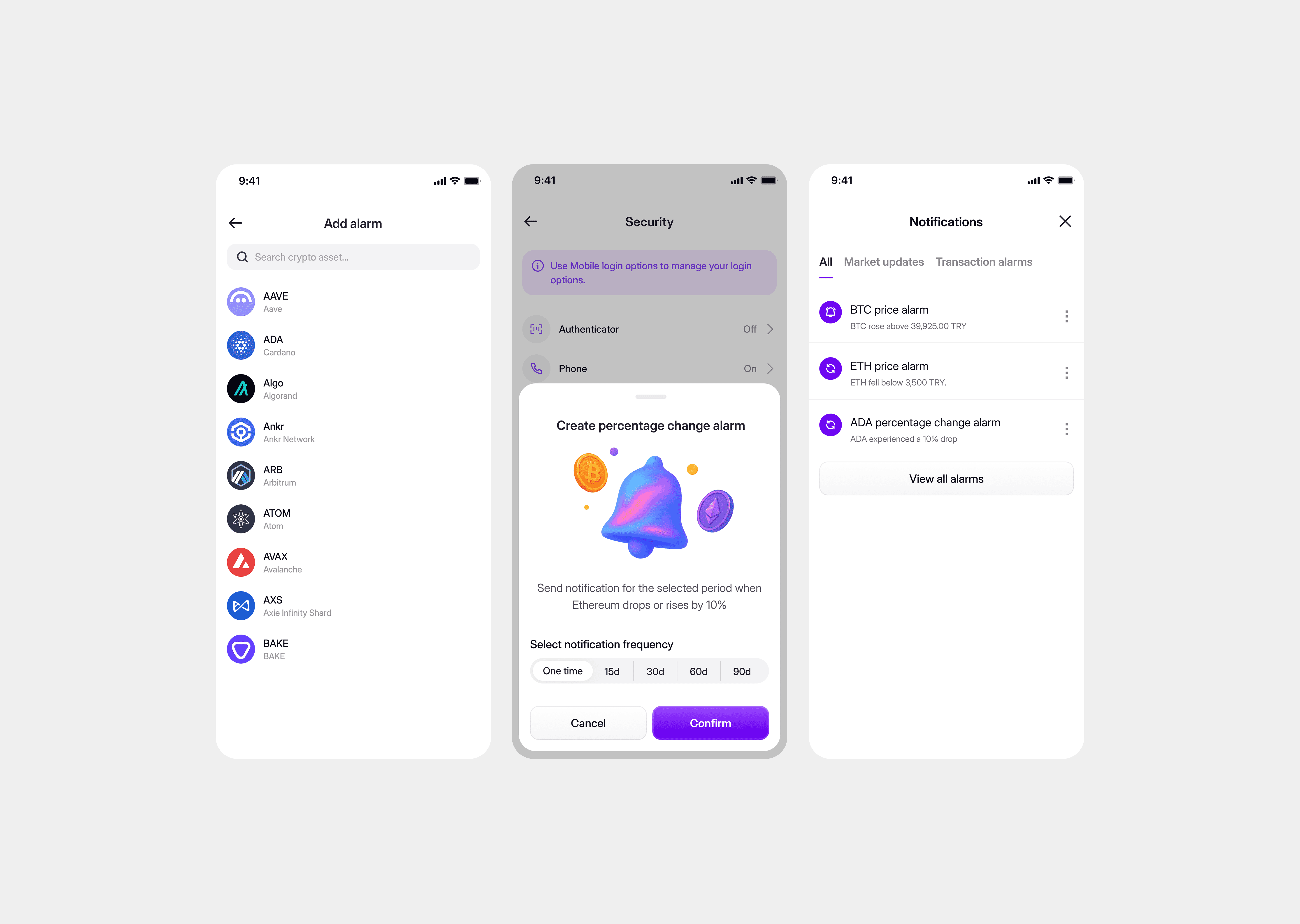
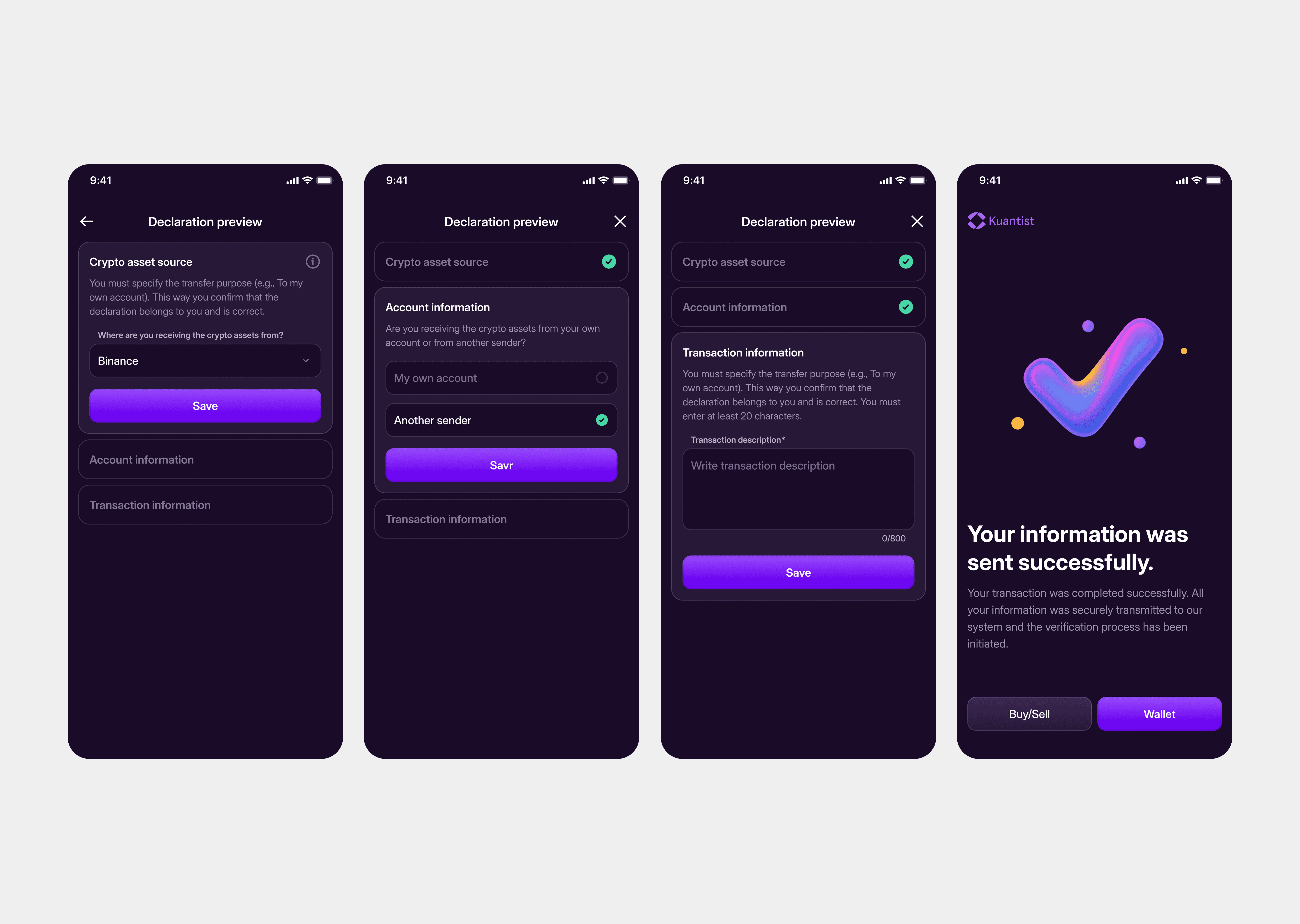
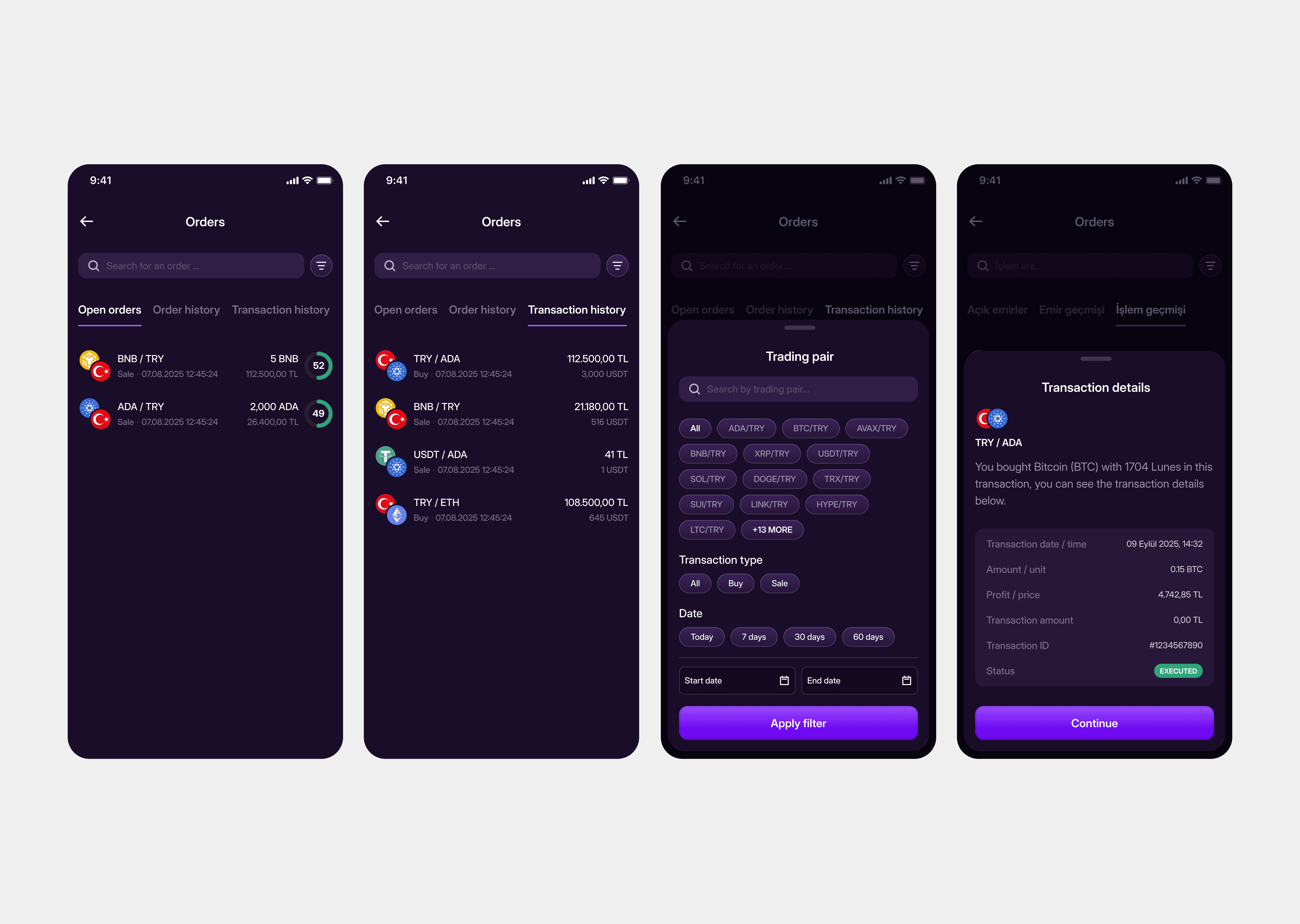
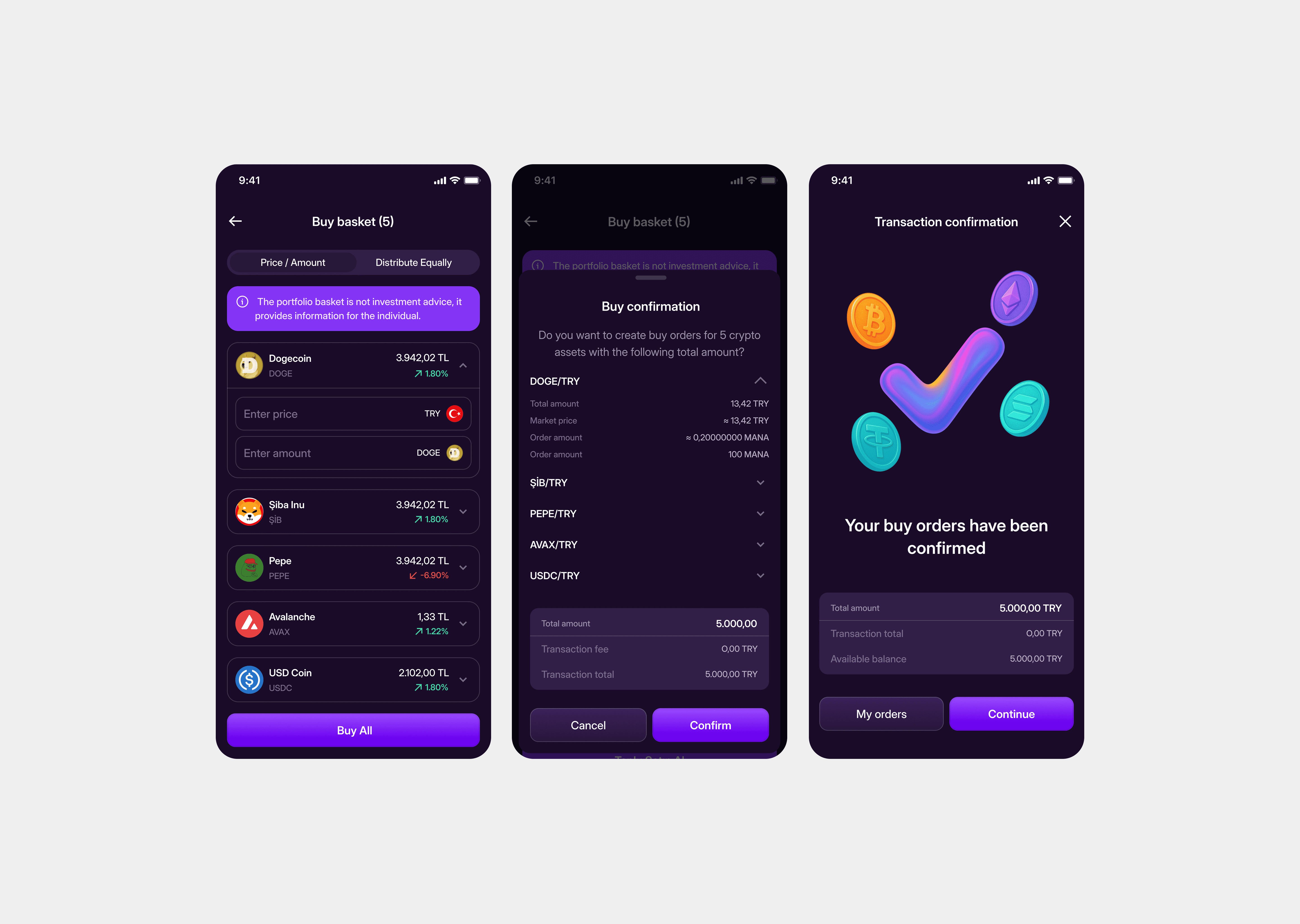
Kuantist’s existing mobile app and web experience suffered from fragmented information architecture, friction in critical flows, and weak visual consistency. As a result, users struggled to understand the product, hesitated at key decision points, and often failed to complete essential actions such as buy/sell transactions. The goal was to modernize the experience with clearer structure, smoother user journeys, and a strong, trustworthy visual language across platforms.
Mobile App Design
Nov 17, 2025
Situation
Kuantist’s existing mobile app and web experience suffered from fragmented information architecture, friction in critical flows, and weak visual consistency. As a result, users struggled to understand the product, hesitated at key decision points, and often failed to complete essential actions such as buy/sell transactions.
The goal was to modernize the experience with clearer structure, smoother user journeys, and a strong, trustworthy visual language across platforms.
Task
As part of a 10-week collaboration with Atolye15, I owned the end-to-end UX process to:
Clarify user and business needs
Reduce friction in critical user journeys
Establish a consistent experience framework for mobile and web
Build a scalable design system to support future growth
Action
Discovery & Research
I analyzed the existing product across flows, screen hierarchy, and content structure to identify usability gaps and friction points. In parallel, I aligned user needs, business goals, and technical constraints into a single UX framework that guided all design decisions.
Problem Framing & UX Strategy
I redefined the product’s core user tasks and rebuilt journeys around critical flows. By simplifying steps and clarifying decision moments, I reduced cognitive load and improved flow continuity, especially in high-risk actions like trading.
Information Architecture & Flow Design
I restructured navigation, content grouping, and page hierarchy to create a cleaner, more predictable experience. A shared interaction model was established to ensure consistency across mobile and web.
Prototyping & High-Fidelity Design
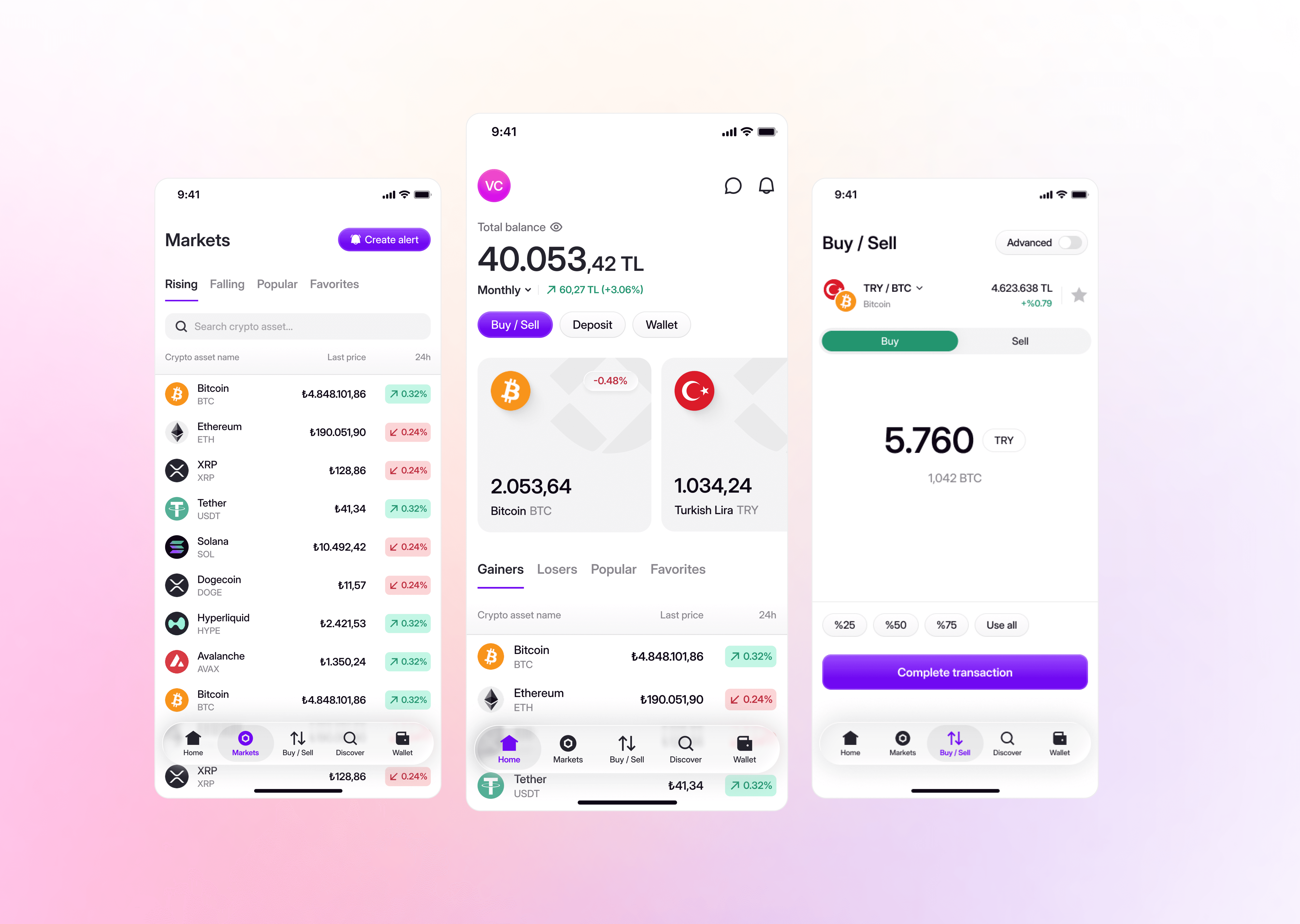
I translated strategy into high-fidelity interfaces and interactive prototypes, validating clarity and flow continuity through iteration. Design decisions focused on readability, trust signals, and clear feedback at every step.
Design System
Instead of one-off screens, I built a scalable design system with reusable components, rules, and patterns. This improved visual consistency, reduced design debt, and accelerated development handoff.
Stakeholder Alignment
I had weekly design reviews with the client, clearly communicating design rationale and trade-offs. This ensured all decisions remained aligned with product goals and reduced friction during implementation.
Why
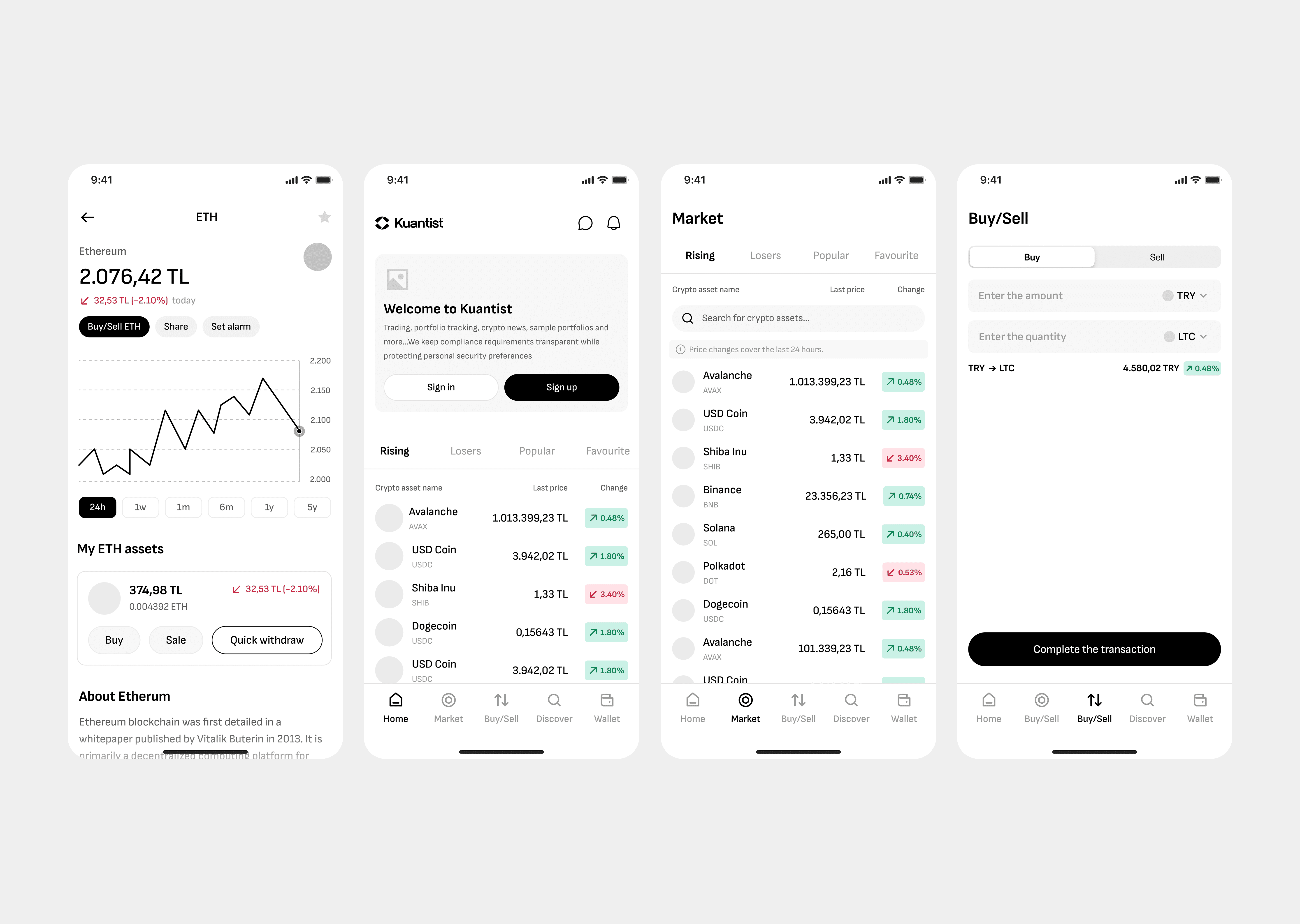
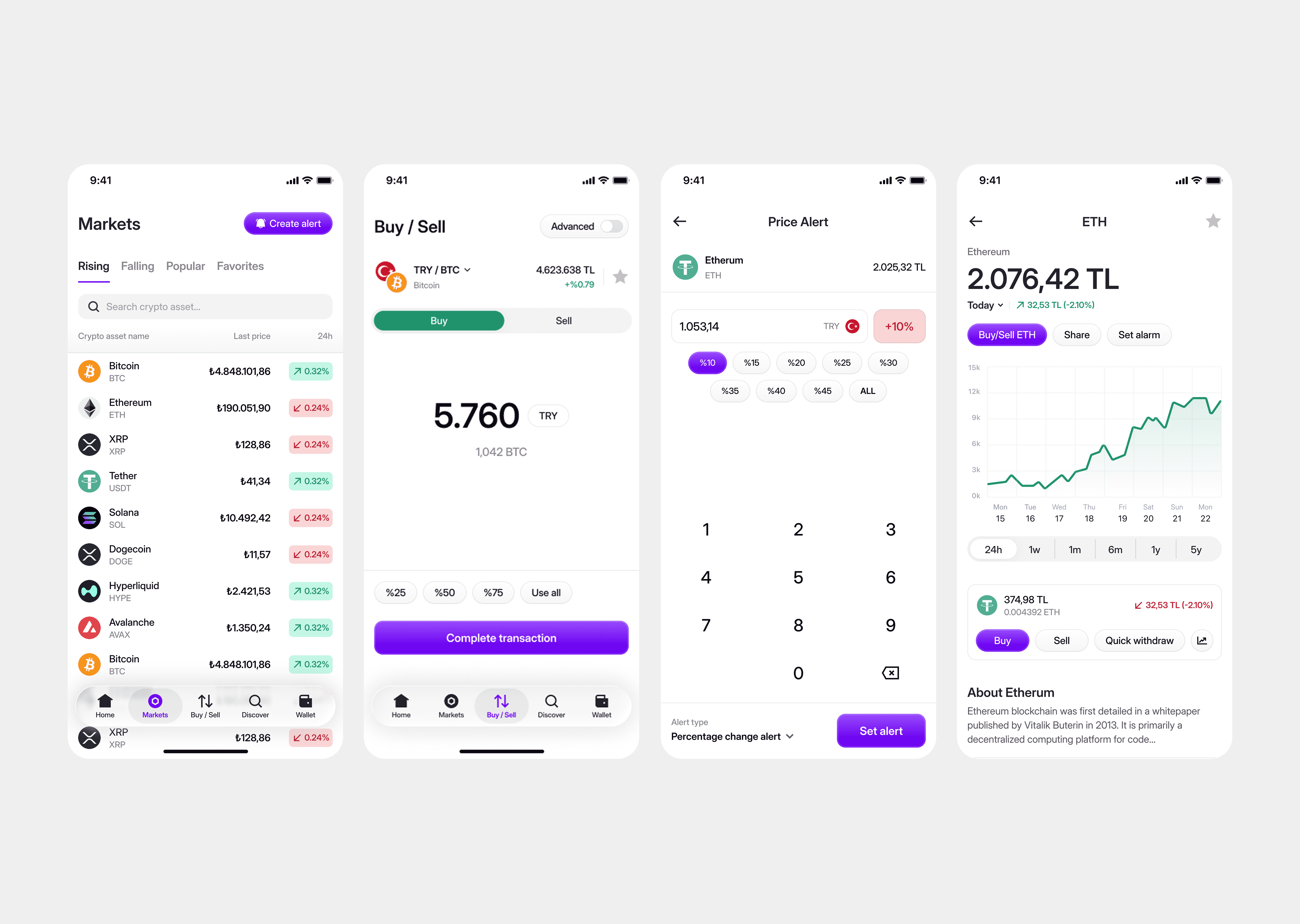
I approached this project with a strong focus on trust, clarity, and cognitive load, as cryptocurrency products often intimidate users due to complex terminology and perceived risk. My design decisions prioritized making financial data easy to scan and understand at a glance, reducing friction for both new and experienced users.
I structured the interface using a clear visual hierarchy and consistent layout patterns to help users quickly differentiate between balances, market movements, and actions. This was intentional to minimize decision fatigue and prevent costly user errors, which are especially critical in crypto-related flows.
Key UX Challenges Solved
1. KYC & Onboarding Friction Under Regulatory Constraints
Problem:
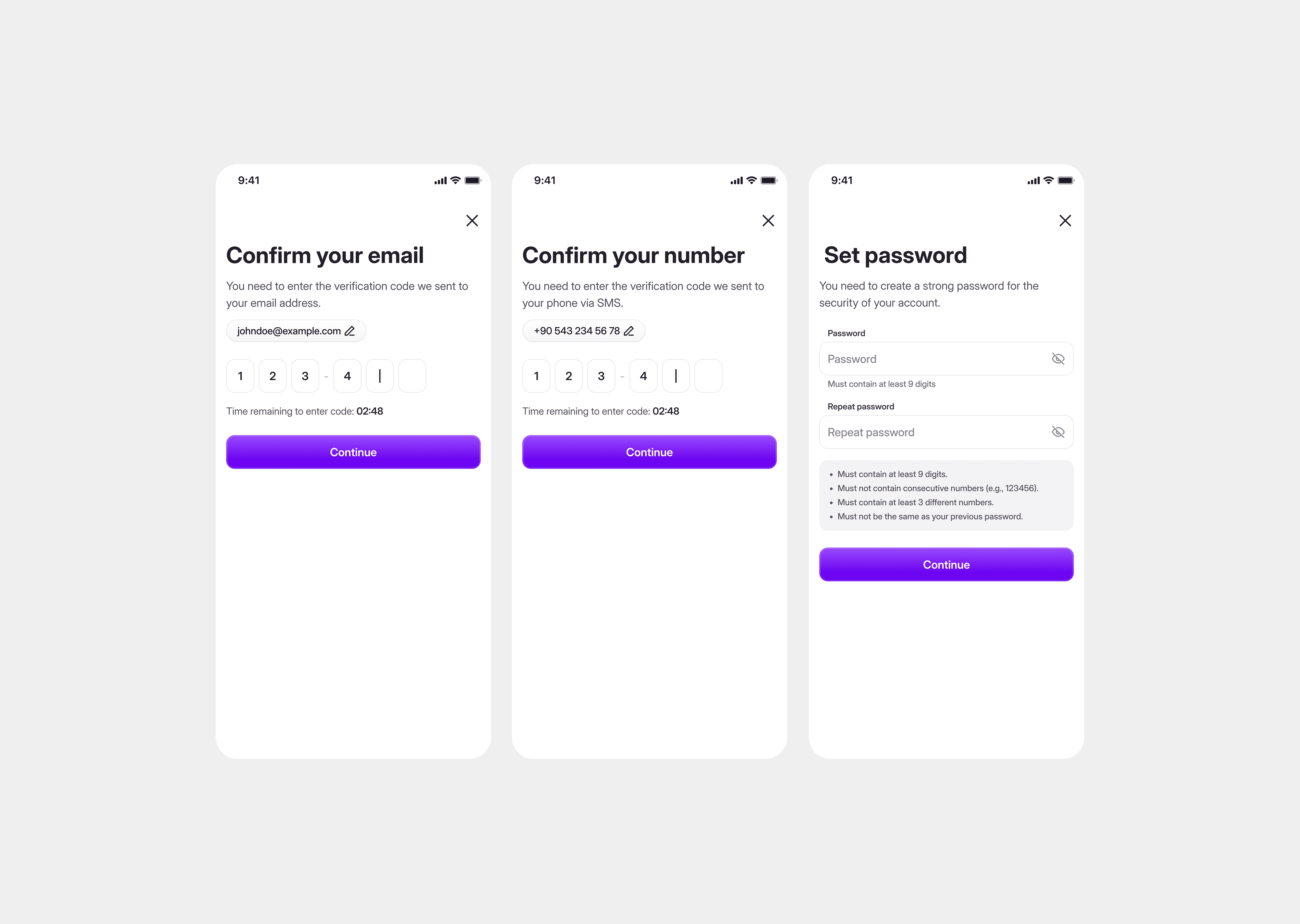
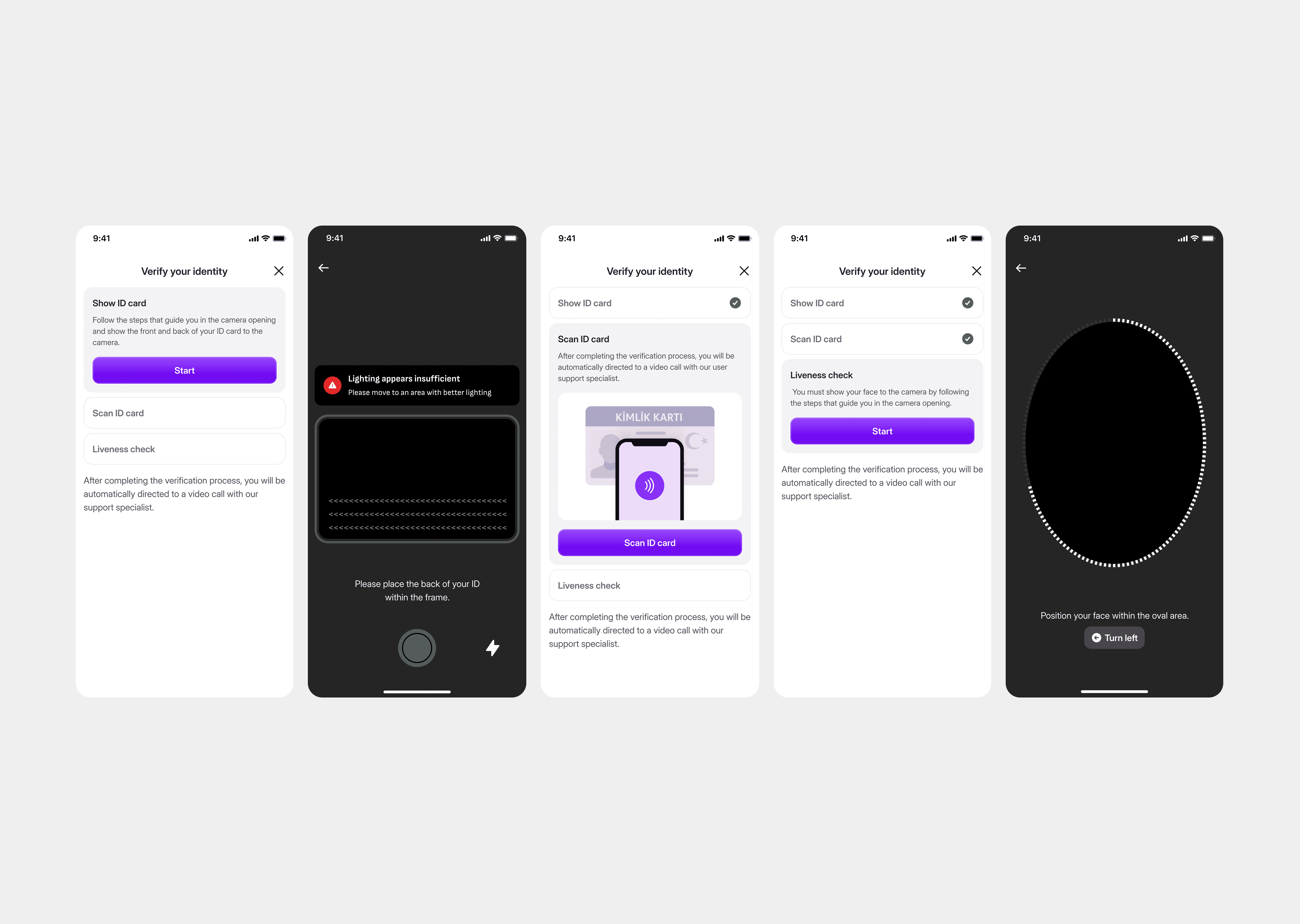
Due to recent crypto regulations, users were required to upload multiple documents and provide detailed personal information during sign-up. Presenting all requirements in a single flow caused confusion, frustration, and early drop-offs.
Solution:
I redesigned onboarding as a progressive, step-based experience using a multi-step accordion structure. Regulatory requirements were grouped into logical sections with clear progress indicators, contextual guidance, and improved validation. This made the process feel manageable while maintaining compliance.
Outcome:
Reduced cognitive load during onboarding, improved sign-up completion, and increased user confidence without compromising regulatory requirements.
2. Buy/Sell Flow Clarity at Decision Points
Problem:
In the existing Buy/Sell flow, critical information such as fees, exchange rates, and commissions lacked hierarchy, causing hesitation and abandonment at key decision moments.
Solution:
I simplified the flow by optimizing step count, restructuring information hierarchy, improving error handling, and strengthening guidance through microcopy and feedback states.
What I Learned
This project deepened my understanding of user behavior in regulated fintech environments, particularly how users perceive risk, trust, and effort during critical actions such as onboarding and trading. Working closely with compliance-driven flows helped me anticipate where users are likely to hesitate and what information they need to move forward with confidence.
Through continuous collaboration with product managers and stakeholders, I strengthened my ability to translate complex business, regulatory, and technical constraints into simple, user-friendly solutions. Aligning multiple perspectives around a shared UX strategy reinforced the value of clear problem framing, strong rationale, and incremental decision-making in solving complex product challenges.